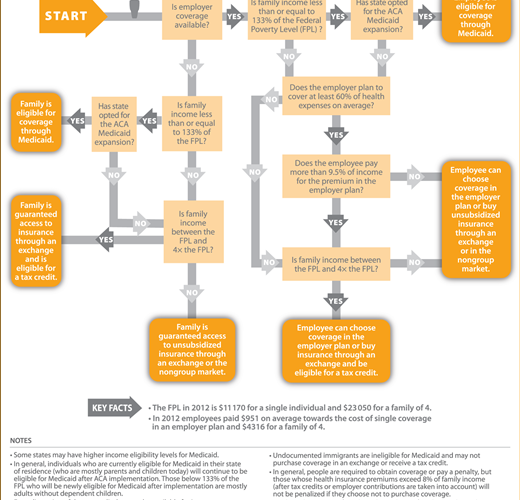
The Kaiser Family Foundation and the Journal of the American Medical Association have teamed up to provide a helpful flow chart that shows how people will obtain health coverage once the Affordable Care Act takes full effect next year.

The Kaiser Family Foundation and the Journal of the American Medical Association have teamed up to provide a helpful flow chart that shows how people will obtain health coverage once the Affordable Care Act takes full effect next year.

In 1966, one year after the Watts Riots illuminated the scarcity of health care services in South Los Angeles, 25-year-old Leonard Deadwyler lay mortally wounded in his car, shot by a police officer who insisted Deadwyler was drunk instead of what he was: A husband rushing his pregnant wife to a hospital some 20 miles away. Los Angeles County leaders reacted to the riots and Deadwyler’s passing by building what became known as Martin Luther King Jr./Drew Medical Center, a full-scale teaching hospital, complete with trauma center, which opened in 1972.

Serve the People Community Health Center opened its doors in 2009 to offer free health care to the needy. The clinic’s dedicated founder, Dr. Dimitri Sirakoff thinks there’s more to health than health care – especially after seeing the effects of a poor diet on patients in his years of practice.

Santa Cruz County mental health staff and patient advocates in California predict that many children enrolled in the state’s Healthy Families Program, an insurance program for low-income families that will be phased out in 2013, should actually have better access to mental health services once they start transitioning to Medi-Cal in January.

The Affordable Care Act excludes undocumented immigrants from buying health insurance on state health benefit exchanges. But healthcare providers in the Salinas Valley are weaving safety nets of their own for medically vulnerable farm and migrant workers who are essential to the country’s food production.

Ah, health insurance. It can be aggravating when you have it, and it sure can be aggravating when you don’t. And the wizards behind the curtains at the U.S. Department of Health and Human Services, the state Managed Risk Medical Insurance Board and a private company whose motto is “Helping Government Serve the People” aren’t making it easier as the start date for “Obamacare” grows closer.

Health care reform will bring big changes to community clinics that treat the poor and uninsured. For the first time, many of their patients will be eligible for insurance and reimbursements will eventually replace grant funding for clinics. Unfortunately, patients may not know understand what kind of assistance they can get or know how to navigate the new insurance exchange.

Undocumented immigrants and lawfully present immigrants who’ve been here less than five years are excluded from health care reform. That may put community clinics that treat the poor in a difficult financial position – and make getting care harder for immigrants.
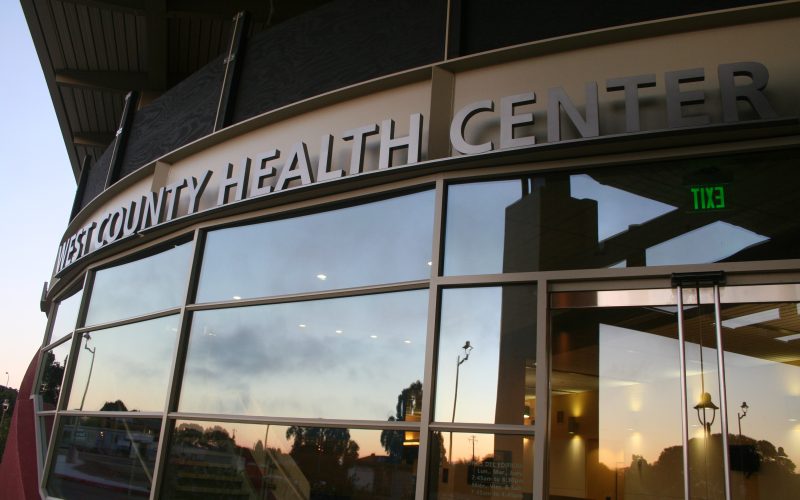
The West County Health Center is the wave of the health care future, says ACA co-author Representative George Miller.

South Los Angeles, maybe best remembered as ground zero for the 1992 Rodney King riots, now boasts an unexpected draw. Patients are traveling from other parts of Los Angeles to seek care at the South Central Family Health Center, a clinic that provides health care to the uninsured – and is using grants from the Recovery Act and the Affordable Care Act to innovate and grow.