Public Health

Homeless census connects most vulnerable to housing

Volunteers spend three days interviewing homeless people before dawn, when experience has shown they’re easiest to locate. Questions range from age and length of time on the street to whether a person has liver disease or HIV/AIDS to injuries related to cold weather. From that, the Harvard-designed survey seeks to extrapolate respondents’ health risk, and then find housing for the most vulnerable first.


Local organizations help low-income residents find home in downtown Fresno

Bob Dittmar’s day begins on the roof at six in the morning. The late summer sun is punishing even at this early hour. This isn’t one of the new suburban houses that crop up quickly in the northern parts of Fresno. Dittmar is downtown, in a long-neglected area known as the Lowell neighborhood, which takes its name from the nearby elementary school, though its roots, and its struggle with poverty, go back generations.

Using tech to battle STDs

As public health budgets are slashed, and money for sex education and outreach evaporates, California public health officials are slowly introducing new technologies including texting and computer-based training to combat climbing rates of STDs.

Homeless for Years, Older Women in Los Angeles Find a Good Home

On Skid Row, the downtown hub of the homeless population in Los Angeles, transients ask passersby for change, slump against concrete buildings, and mumble obscenities at bus stops. The Downtown Women’s Center’s beautiful new building, sitting in the middle of the mayhem, is a standout. The DWC’s Day Center serves hundreds of homeless women in its facilities every day and 71 lucky ones live in permanent residences, or efficiency apartments.

Refugee Farmers Grow Local Roots to National Market

On an overcast morning recently, the New Roots Community Farm in City Heights was awake with the spicy-sweet smell of mint. Noeuth Ith, a Cambodian refugee who usually harvests the herb in small bunches to make spring rolls at home, was quickly hacking bouquets of green leaves from their bases and dunking them in water. With the help of other New Roots farmers, she boxed more than 30 pounds of the fragrant leaves to sell. A first for the International Rescue Committee farm, the large-scale harvest was commissioned by Earnest Eats, a granola company based in Solana Beach.

Walking group a win-win proposition for city and residents

For years, Santa Ana residents were scared away from their parks by high crime rates. Mattresses, drugs and other indications of illicit activities littered the park grounds. Public trails and walking areas were gradually being converted to dumping grounds and destinations for crime, residents told Gerardo Mouet, executive director of the city’s Parks and Recreation department.

Banned Pesticide Use Remains High in CA Strawberry Fields

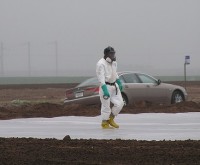
In some of California’s top strawberry-growing counties, levels of the banned pesticide methyl bromide remain nearly as high as they were a decade ago, despite a mandated phaseout, according to an analysis by New America Media. The fumigant was supposed to have been phased out completely by 2005, under a global pact to halt the thinning of the earth’s protective ozone layer. But in 2009, the latest year for which data is available, more than 5 million pounds of the pesticide were still in use, down just 50 percent from 2000.

No clear successor yet in green alternatives to gasoline

Buying a more fuel-efficient cars, which tend to be more expensive than conventional cars, is a difficult decision for the everyday consumer. But the choices are even more complicated for business owners in the Central Valley. Adopting a more fuel-efficient model is better for the environment and air quality, making such a leap can be an economic challenge. In the Central Valley, home to many industrial and agriculture operations, some businesses must manage a fleet of vehicles that would be expensive to replace en masse.

X Close

Subscribe to Our Mailing Lists

* indicates required
Email Lists