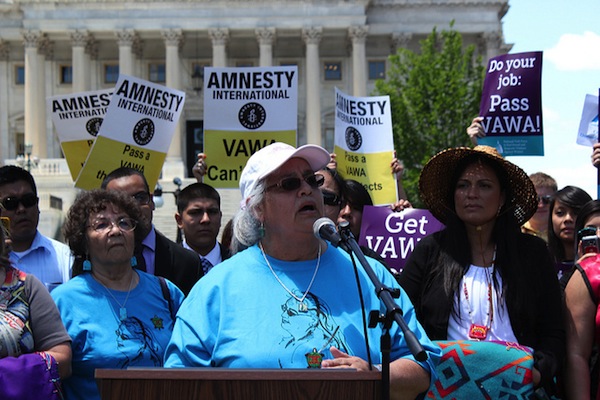
Native American women are physically abused, raped and stalked more than women of any other racial group in the nation. A new provision in the Violence Against Women Act, passed in February, allows Native American courts to prosecute non-Native offenders for the first time since the 1970s. While most expect the provision to help address violence against Native women, particularly in Western states, it also poses challenges for California’s tribal courts, which work with far fewer resources than county courts.

Violence & Justice
When California legislators decided that certain felons no longer would be held in the state’s overflowing prisons, they were under pressure from a court order to relieve the system’s dangerously overcrowded conditions. But part of their goal also was to keep lower-level convicts near rehabilitative programs in their own communities. Some counties are embracing the goal of rehabilitation, too, and are turning to local non-profits to help people convicted of non-violent, non-serious and non-sexual crimes start a new life.
“Coaching Boys Into Men” works with athletic coaches nationwide who then talk with their players — on the bus, in the weight room or during practice, among other places — about respect and healthy relationships, especially with the opposite sex.
What happens at Veteran’s Treatment Court is anything but typical. Modeled on drug treatment courts, they provide extra support and treatment opportunities for vets.
Undocumented immigrant victim of domestic violence are often more vulnerable to abuse because of their immigration status, language barriers and lack of finances. But the reauthorization of the Violence Against Women Act, which President Obama signed on Thursday, may offer stronger protections for such victims.
People in same-sex relationships face intimate violence as often as straight people do – but the victim services available now are not enough to keep gay, lesbian and transgender people safe from their abusers, advocates say.
New data shows the need for a proposed law that makes removing a GPS ankle unit a felony punishable by prison, according to supporters of the law.
A report released last week sheds new light on what’s driving arrest rates in California – and what prison reform can do to better prevent crime.
The prison reform law that shifted responsibility for non-violent felons from the state to the county is also affecting the management of more serious, violent offenders.
Critics of prison realignment say that the law has caused a spike in crime. But experts caution that it is far too early to understand the effects of the law.