Most workplaces (70 percent) do not have a formal policy or program to address violence, let alone domestic violence specifically, despite a survey indicating that 44 percent of adult employees reported personally experiencing the effects of domestic violence in their workplace.
Violence & Justice
Chanel, a petite African American woman with sleek hair and hazel eyes, trembles as she remembers the last time her husband beat her. He struck her with one chair and then another. “They broke on my body as I tried to hide my face…. When I went to the hospital, I thought, Now’s my chance. I’ve got to go. I’ve got to save me and my kids.”
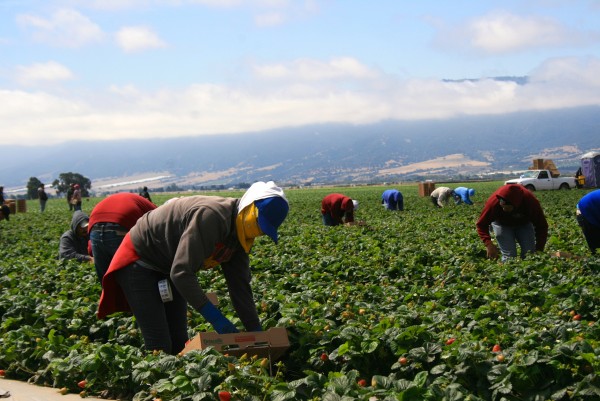
In the foothills of the Pajaro Valley, dozens of nursery workers dressed in jeans and work boots file into a warehouse. It’s just past lunchtime on a weekday. Normally the workers would be heading back to the white-tented greenhouses to tend to the broccoli, chard and kale shoots that grow from nursery flats, but today they are attending the final presentation of Speedling Incorporated’s Safety Week, a workshop on sexual harassment and assault.
Terra Slavin first walked into a domestic violence shelter when she was 16. In some ways, she never left.
She was there as a volunteer, but she had no idea at the time that the experience would help determine her calling.
When Maricruz Ladino started a job at a Salinas lettuce packing plant in 2005, her supervisor began making sexual advances, insinuating that if she didn’t succumb to his sexual demands he would fire her. Then, one day the supervisor drove her to an isolated field—supposedly to inspect the crops. Instead, Ladino says, he raped her.
In this story we go to Richmond, where a mother of three, Alejandra Escobedo, was trapped in an abusive relationship. Like other immigrants in her situation, she didn’t speak English and didn’t have a job. It was hard to see a way out, until she found The Latina Center — an organization that helps Latinas move forward and become leaders in their community.
Adults who have dyslexia are much more likely to report they were physically abused before they turned 18 than their peers without dyslexia, according to a new study from researchers at the University of Toronto and the University of North Carolina School of Medicine in Chapel Hill.
The American Academy of Pediatrics and the Brady Center to Prevent Gun Violence have launched the ASK (Asking Saves Kids) campaign to encourage parents to ask if there is a locked, loaded gun in the home before a child goes out for a playdate. According to the AAP, one out of three homes with children in the U.S. has a gun, nearly 1.7 million children live in a home with a loaded, unlocked gun. Every year, thousands of kids are killed and injured as a result.
In the wake of the killings in Isla Vista a week ago today, the conversation has turned to the link between mental illness and violence.
A new study that looks at U.S. Department of Transportation data finds that drunk driving remains a significant cause of child deaths for children under 15 in the United States. The researchers looked at National Highway Traffic Safety Administration data over ten years from 2001 to 2010 during which over 2300 children were killed.