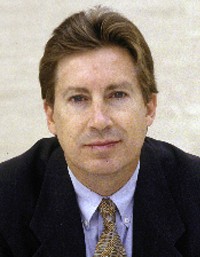
As a cub reporter for San Francisco’s alternative weekly in the early ’80s, Tim Carpenter loved slaying sacred cows. If asked what he was rebelling against during this “fun time,” he would have channeled Marlon Brando in “The Wild One” with this famous line: “Whaddaya got?” Thankfully, some people never grow up. Carpenter, now 52, has directed his rebellious spirit into fixing a broken system—housing for the aging.
Aging
As Dennis McCullough’s mother made the journey from being a vibrant, healthy 85-year-old to a critically ill 92-year-old, the Harvard-trained geriatrician found himself increasingly critical of her care.
For all of today’s talk of personal freedom, rare is the person who actually lives it. Yet freedom is one of the most frequently reported experiences of older adults who pursue bold new adventures in later life. As the blocks of doubt and failed expectations fade from sight, and life’s mortal coil becomes finite, travelers on this fresh path of aging often celebrate a new sense of freedom… and self. Perhaps nowhere is this on display more abundantly than the Stagebridge Senior Theatre in Oakland, which has encouraged more than 2,500 older adult students to act, sing, dance, write and improvise over the past 35 years.
A slew of new medications to treat the hepatitis C virus entered the market last year, promising that just about anyone with the disease can be cured. The medications were a groundbreaking development, especially for older patients who’ve suffered through earlier, less effective treatments, only to have the disease return.
A review of more than 25,000 hospital admissions in Rhode Island finds that patients with a documented diagnosis of dementia are nearly 20 percent more likely to be readmitted within 30 days than those without dementia.
Dale Bredesen has provocative theory about treating Alzheimer’s disease, one that takes a bold integrative approach to treating the disease and may help answer vexing riddles that have long perplexed researchers and drug manufacturers alike.
One in 12 American older people regularly go hungry, according to a new study. Researchers at University of Illinois and the University of Kentucky used data from the National Health and Nutrition Examination Survey (NHANES). The report also shows that seniors who go hungry also face negative health and nutrition consequences.
A new study on Alzheimer’s disease by researchers at the University of Minnesota School of Public Health finds that a culture change is desperately needed for to help improve the quality of life for Alzheimer’s patients in nursing homes. Facilities also need help to prepare for the millions of patients expected to be diagnosed with the disease in the next few decades.
In the near future, successful care for older adults will depend on bold and creative collaborations.
That’s the message aging pioneer Ken Dychtwald gave last month’s Aging in America conference. Dychtwald, CEO of the consulting group Age Wave, might as well have been describing the “strange bedfellows” collaboration between two organizations often considered mortal enemies – a county aging services agency and a managed health care plan
A new review of studies on breast cancer and elderly women by researchers at UCSF and the Harvard School of Medicine suggests that doctors should focus on how long a patient is likely to live when deciding whether to order mammograms for their oldest female patients rather than order them routinely. The researchers say their study shows that the harms of screening likely outweigh the benefits unless women are expected to live at least another decade.