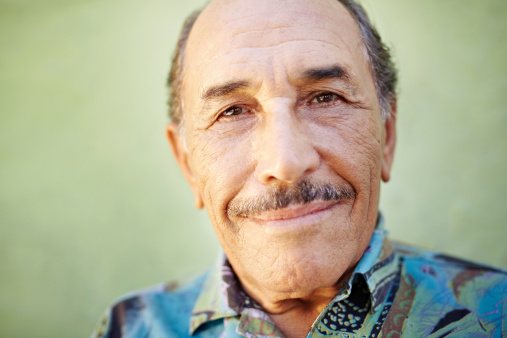
A swelling Latino population in California has meant rising numbers of Latino elders and, with them, a growing movement to support their mental health needs. Yet the movement faces a huge obstacle: Latinos don’t typically seek out help for behavioral health concerns.

Aging
When AARP’s Jo Ann Jenkins announced it was time to “disrupt aging” and view the elder years as one of life’s most positive phases, she spotlighted the great expectations for Monday’s White House Conference on Aging.
A push to allow “assisted dying” in California was derailed this week when a bill already passed by the Senate was quickly pulled from an Assembly committee, lacking the needed votes.
Judy Zlatnik, Meals on Wheels Volunteer, Age 75, “Many of the people that need Meals on Wheels are unable to drive. Some of them are unable to get out of a chair. A few are bedridden. But for some reason they aren’t able to get out of the house, they aren’t able to go shopping. And if they’re offered transportation they’re still not able to provide the meals.”
Five older adult women sit in recliners covered with blankets. They wear soft booties on their feet while harp music plays quietly. A TV monitor gently rotates photos of flowers, while the walls feature beach décor graphics – deck chairs, fishing gear, plants and beach grass. The room’s artificial lights are off. Natural light suffuses the room. The aromatic scent of orange permeates the air.
The 2015 White House Conference on Aging is set for Monday, July 13, and will be streamed online. While the one-day virtual event won’t solve the pressing problems of aging – most acutely elder abuse and retirement savings – executive director Nora Super says it will be successful if it achieves one overarching goal: Change the dialogue about aging to a positive one.
A popular view of older adults — that they are an unproductive drag on the American economy – is under challenge by a new brief commissioned by AARP called “The Longevity Economy.”
No other death has so profoundly changed the way we perceive the dying process as that of Brittany Maynard, the young California woman who insisted on the right to die on her own terms by moving to Oregon, where she could legally end her suffering from terminal brain cancer.
The mind-boggling frustration of a simple visit to the doctor’s office is legendary. Clinicians interrupt patients offering medical histories within an average of 15 seconds. The typical length of a visit to a primary care physician is just 15 minutes. And after leaving, patients retain only a fraction of what a doctor has told them.
It’s been called “The terrible choice” for the seriously ill. Choose hospice and imminent death… or treatment in hopes of a cure. But not both.