
Five million of California’s poorest and most vulnerable residents could lose their health coverage if the American Health Care Act becomes law, health advocates say.

Five million of California’s poorest and most vulnerable residents could lose their health coverage if the American Health Care Act becomes law, health advocates say.

“It really helps and it really works if you’re open minded and willing to allow the process to occur. If you attend it and just sit there with your arms crossed and you’ve got a messed up look up on your face and you’re really not participating in the class, it won’t help you.”

On Monday, the San Diego school district – the second largest in the state – announced it will collaborate with Baja schools to make sure that kids are getting compatible and similar education on both sides of the border.

In an attempt to shield the state from federal policy changes, California legislators are working on a series of women’s health bills.
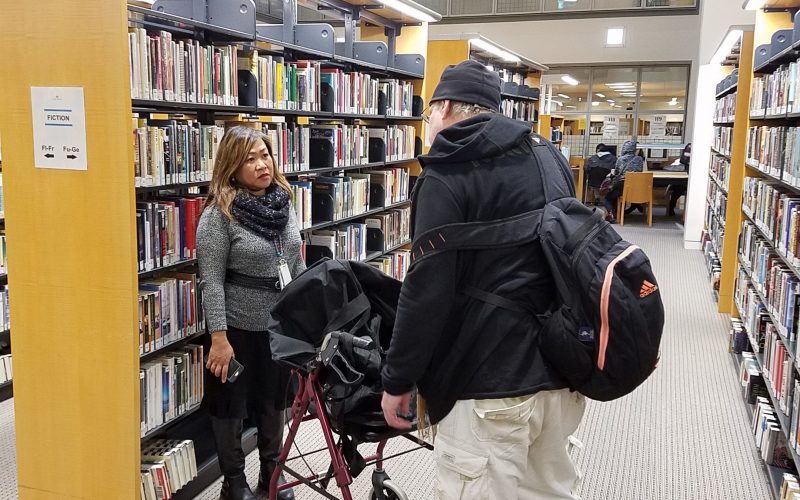
The homeless have long found a refuge in San Francisco libraries – long enough that once-homeless patrons are now reaching out to those in need.

A Ventura clinic is the first health center in the Central Coast region specifically for people who are lesbian, gay, bisexual or transgender. In a time when mainstream culture has made strides in recognizing LGBT rights, access to culturally sensitive health care remains out of reach for many who identify outside traditional gender or sexual norms.

Homeless or disabled college students in eight California counties will soon be able to use their CalFresh electronic benefits transfer cards to buy food at campus food services.

The beds lie in neat rows in the dim light, elongated shallow bowls of heavy plastic, each cradling a waterproof mattress.
They’re built to contain the urine and vomit of drunkenness, then to be ready for service again after a quick wash and treatment with disinfectant.

Mick Smyer launched the website Graying Green to help foster a social movement that would “energize older adults around what is arguably our most important issue.” And where others – including climate change scientists – only saw tired victims, Smyer saw possibilities.

Launched in 2013, the Asthma Impact Model, focuses on helping low-income families in the Central Valley better manage their children’s asthma, thus avoiding ER visits. The program was designed by the Central California Asthma Collaborative and Clinica Sierra Vista, a Fresno health clinic.