Christina Alvarez, who turned 17 on Monday, has a 15-month-old son. She barely speaks to the father any more. And while she hopes to earn her high school diploma and move her baby away from the crime, poverty and emotional defeat of her own childhood neighborhood, she knows the odds are against her. Activists say that for many teenage parents in Kern County, Alvarez’s experience is typical. Increasingly, it’s out of sync with the rest of California.
Children
“Have you seen ‘Charlie Bit My Finger?’” Trelena Thomas asked through a tempered laugh when calhealthreport.org met up with her to film the final piece in our three-part series on the family. Since carrying her San Diego Broadband Initiative computer through the door of her Mid-City apartment a week ago, family time has come to include YouTube favorites. But what’s more, Thomas has connected to services and groups that promise to improve her family’s quality of life–her middle daughter has already climbed half a reading level thanks to an online reading program.
California’s state prison population has remained stubbornly high over the past decade. The new Alameda County Chief Probation Officer wants to lead his department in a new direction, one that focuses on prevention. David Muhammad, an Oakland native, favors an approach that promotes incentives to good behavior, rehabilitation and alternatives to incarceration. These are the kinds of methods, according to Muhammad, that get the best results – less people in prison and on probation and parole.
In a tiny school district on the outskirts of Stockton, a progressive elementary school principal is incorporating the work of leadership icon Stephen Covey to produce some surprisingly youthful leaders: an entire student body of over 500 kindergarten through 6th graders. Principal Nancy Martin hopes to end school violence and bullying by creating responsible students guided by strong student leaders. Her ambitious goal and the methods she employs place her on the cutting edge of violence prevention in the schools, joining leaders from across California and the nation who are trying new methods to change their campus culture.
Maria “Lou” Calanche believes in dreams. But Calanche, a community activist since her teens, knows that residents of the Ramona Gardens housing project need leadership skills to turn their dreams into reality. As Executive Director of the Boyle Heights non-profit Legacy LA, she works with parents and at-risk teens to find alternatives to the gangs, violence and drug addiction that perpetuate the cycle of incarceration, teen pregnancy and low graduation rates.
Larger class sizes. Salary cuts. Furlough days. Layoffs. These are the grim choices facing school board members throughout California after another year of crushing budget deficits. Yet more tough choices remain.
Childhood obesity is a big problem in Merced. A group of local teens are doling out a dose of reality about the link between sugary drinks and obesity to parents and children—and talking about a proposed remedy. The teen group wants to educate locals about a soda tax introduced in the assembly this February.
In September 2010, the California legislature passed a law requiring all students in grades seven through 12 who are in private and public schools to show proof they received the “Tdap” vaccine that protects against pertussis. How are school districts notifying parents about the new requirements? Rosa Ramirez reports from Richmond.
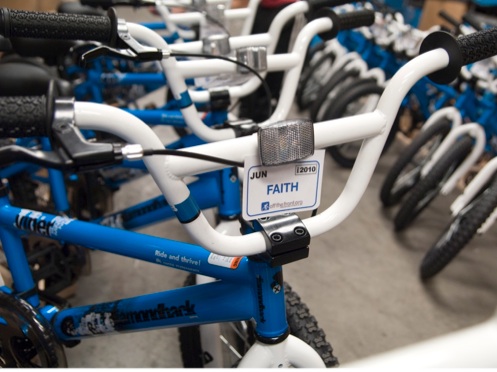
At Fresno’s Susan B. Anthony grade school, located in one of the most impoverished area of Fresno, 78 percent of fifth graders don’t meet the state’s requirements for healthy fitness. Fresno pastor Mike Slayden decided to tackle the problem by encouraging students to walk or bike to school. Through his not-for-profit, he offers them a shiny prize for their work: a brand new bike.
In the late 1980s, I worked as a nurse in refugee camps in Uganda and Somalia, tending to some of the world’s poorest women. Then I moved back to San Francisco and was shocked by the poverty I discovered right here at home. What surprised me the most was to see pregnant women and children living in homeless shelters, or even making do on the streets.