More people than now have health insurance in California, but is it the kind of coverage they want? Several reports in the past weeks noted that insurance networks are narrowing under the Affordable Care Act. Some enrollees are finding that the doctors and hospitals they thought they’d have access to aren’t actually under their plan’s umbrella.

Public Health
The increasing rate of obesity in the United States require obstetrician/gynecologists to be prepared to care for patients who are obese in an ethical, nonjudgmental manner. At the same time, they must remain cognizant of the medical and social effects of obesity, according to new guidelines from the American College of Obstetricians and Gynecologists.
Last week the Health Report wrote about how the state’s annual Medi-Cal renewal forms are so complicated that they may cause tens of thousands of people to lose coverage. Among the problems is that the forms are only available in English and Spanish, reported Claudia Boyd-Barrett.
Obesity. Heart disease. Stroke. Lung Cancer. Almost two-thirds of the deaths in Riverside County are linked to poor nutrition, lack of physical activity and tobacco use. And the county ranks just about last (54th out of 56 California counties) on making the physical environment conducive to health.
We’ve long known that diabetes and its related illnesses cause havoc in people’s lives and drive up health care costs, but a new study from the UCLA Center for Health Policy Research has quantified the damage done with a sobering new statistic: nearly one-third of hospital stays by Californians age 35 and older involve a person who has been diagnosed with diabetes.
An in-depth survey shows that health in the Palm Springs area has gotten significantly worse across a wide range of indicators in the past few years, despite the economic recovery.
Working age adults with disabilities who don’t get any aerobic physical activity are 50 percent more likely than active adults with disabilities to have a chronic disease such as cancer, diabetes, stroke, or heart disease, according to a new report from the Centers for Disease Control and Prevention.
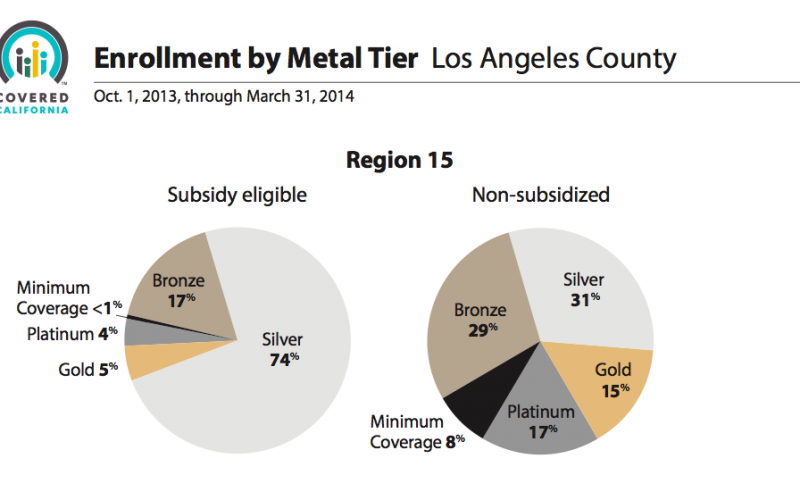
The latest statistics on enrollment in California’s insurance marketplace, released this week, show what kinds of plans people selected in each region. The complete statistics, broken down by 19 regions, are available on the Covered California exchange website.
In an article published Monday, I wrote about the policy decisions that contributed to the massive Medi-Cal backlog. Through interviews and state documents, we revealed that the state prioritized Covered California’s insurance enrollment system over one for Medi-Cal, leading to a backlog of about 900,000 applications from low-income people.
It’s Saturday afternoon at the DeFremery Recreation Center in West Oakland, and several groups of children are watching intently as Quetzal Flores, a student at UC Berkeley and a volunteer with Oakland Youth Aspire, partially fills a few plastic bottles with vinegar and then attaches a balloon filled with baking soda to the top of the plastic bottles.