
California’s teenage birthrate continues to decline and was at a record low in 2014, the state Department of Public Health announced today.

California’s teenage birthrate continues to decline and was at a record low in 2014, the state Department of Public Health announced today.
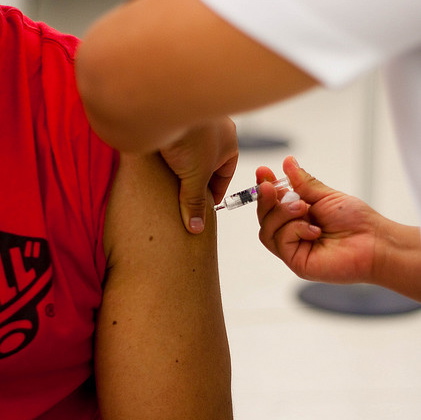
Most California adults don’t get a flu shot every year, but members of certain racial or ethnic groups are less likely to be immunized, according to a new study.

About 10 percent of California teenagers have used electronic cigarettes, a rate that is higher than national estimates, according to a new study.

The pending ballot battle over a proposal to legalize recreational marijuana in California raises a crucial question: would the change expose more children to pot or protect youth from access to the drug by tightening regulations?

In a refrigerated crypt at the Los Angeles County Coroner-Medical Examiner’s headquarters, the bodies lie awaiting examination on the shelves of metal racks, similar to what you might find in a Home Depot.

Climate change is global, but local governments are both the biggest source of the world’s carbon emissions and the first line of defense against its effects. The United Nations Environment Program reports that 75 percent of the world’s carbon emissions come from urban areas. Now, more and more cities and counties are looking for ways to shrink their carbon footprints.

The rates of the most common sexually transmitted diseases – chlamydia and gonorrhea – have risen over the last five years in California, particularly among men, and particularly in the case of gonorrhea, and even in counties that have made a concerted effort to reduce the number of infections.

Many middle and high schools across the state, plagued with cases of sexual harassment, assault and even sex trafficking on campus, are embracing two new laws making sex education mandatory for the first time in California.

Women in California with low-risk deliveries having their first babies have between a 12 percent and 70 percent chance of delivering by cesarean section. But where they fall on that spectrum depends less on medical necessity than on where they deliver their baby.

The public health official who oversees efforts to slow the rate of sexually transmitted disease in California, Heidi Bauer, M.D., has sounded an alarm about a serious shortage of the one antibiotic that effectively cures congenital syphilis.