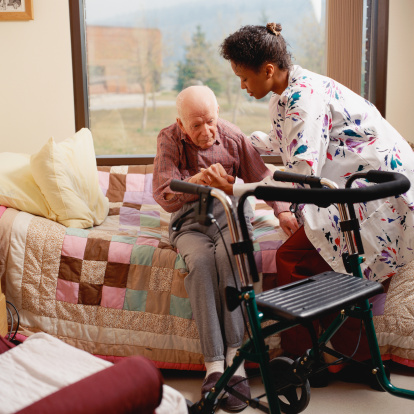
People who live in rural areas suffer from higher than average rates of depression, an illness that can have a devastating effect on older adults. Yet California’s rural areas suffer from a shortage of mental health professionals, leaving seniors with few options for treatment.

Aging
Though they rocked cultural norms by being open about their sexuality in their youth, these lesbian, gay, bisexual and transgender (LGBT) elders, often find that moving into an assisted living or skilled nursing facility means going back into the closet.
Hepatitis C kills more people in the United States each year than any other infectious disease, yet few people realize how widespread the virus is or know what areas of the country are most impacted.
“It’s a beautiful thing when you’ve resuscitated someone and you get them back,” says paramedic Henry Ledo, “but if you can do anything for anyone in their life, it’s at least to respect their wishes.”
When Kirsten Dearing stands up, her autonomic nervous system goes haywire, causing her blood pressure to plummet and her heart to race. It’s a condition that sometimes leaves the Santa Rosa resident unable to cope with everyday tasks, and she’s spent the last two years trying to sort through possible medications, weighing side effects against her debilitating symptoms.
Over the past 40 years, the contract between a technology company and its workers has changed dramatically, with ageism a clear consequence.
Mick Smyer launched the website Graying Green to help foster a social movement that would “energize older adults around what is arguably our most important issue.” And where others – including climate change scientists – only saw tired victims, Smyer saw possibilities.
Long considered the step before hospice, palliative care can actually be offered at any stage of a serious illness and focuses on humane treatment. It is sometimes called “comfort care.” It’s quickly becoming mainstream just as hospice – unknown before the 1970s – has now become standard medical procedure for those with fewer than six months to live.
Overwhelmed family caregivers feel lost and frustrated, unable to navigate a fragmented and confusing system of support that should integrate adult daycare, long-term care and respite care for exhausted caregivers, while educating families on complex topics like dementia.
Nearly everyone has a healthcare horror story. For William and Madeline Jay, theirs is worse than most.