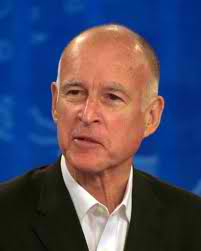
Gov. Jerry Brown’s budget proposal calls for deep cuts in health and social service programs that form California’s safety net. Brown wants to cut $1.7 billion from Medi-Cal, 1.5 billion from CalWorks, and $750 million from the Department of Developmental Services. Brown would limit access to Medi-Cal services, including prescription drugs and place stricter time limits on welfare. He also proposes to limit reimbursements for home care for people who need help with daily living so they can remain in their homes and not in an institution.
Opinion
When Gov. Jerry Brown unveils his first proposal to deal with the state’s $28 billion budget shortfall this week, he probably won’t be offering many new ideas. But he will be hoping that a new approach and a different kind of leadership will help him get his plans through a Legislature and a public that were often hostile to his predecessor, Arnold Schwarzenegger.
California’s economy is hurting and too many of its residents are without insurance coverage. Rural communities have been hit even harder by unemployment and the lack of access to care. Here is an idea to use public and private action to improve rural health care and the economy at the same time.
As Gov. Arnold Schwarzenegger prepares to end his second and final term as California’s chief executive Monday, his public approval ratings are at an all-time low, the media are beating him up for his record in office, and few if any of his fellow politicians are rising to his defense. Schwarzenegger deserves much of the flogging that he’s been absorbing in his final days on the job. But the real story of his seven years as governor is more complex than it appears at first glance. And historians may view his tenure in a better light than those who are judging him based only on the condition of the state and its economy on the day he leaves office.
The California economy, while hard hit by the construction collapse and national recession, remains a world economic powerhouse. The latest numbers portray a state growing slightly faster than the nation over the past decade, driven by the high productivity tech sector. Now the state and national challenge is to mount another burst of growth driven by innovation and creativity. These are difficult challenges in today’s mood of anger and gridlock but we have responded before and must do so again.
Many rural and inner city communities in California have a shortage of primary care doctors. But the state’s programs to incentivize doctors to work in underserved communities have fallen short, even with an attractive offer of student debt forgiveness. Why? One reason is that new doctors are offered jobs with big medical groups where they can practice medicine and not have to worry about running a business as they would if they were on their own. In this piece, Dr. Ronald Fong sketches out a vision where people in the community with business skills work with new doctors to create a partnership that will benefit both.
California’s fiscal outlook is even worse than legislators and most Capitol observers assumed when lawmakers patched together a budget in October 100 days after the start of the current fiscal year. The nonpartisan Legislative Analyst’s office, widely respected for its work on budget issues, projected Wednesday that the state will face a $25 billion shortfall in the budget for the fiscal year that begins next July. And the problem could be worse, if court cases break against the state or Congress and President Obama extend estate tax relief that would indirectly cost California’s treasury nearly $3 billion.
Fix the DMV. That’s my advice to Gov.-elect Jerry Brown. Why start with the Department of Motor Vehicles, when there is so much wrong in state government, so many problems, up to and including another massive budget deficit? Because nothing could do more to instill confidence in government among Californians, starting with teenagers who are still too young to vote.
We need to address our medical students as paladins, and not as squires. We must show them that their patients and circles will view them as leaders, regardless of their self-assessment. And, we must impart to them that leadership is not a burden, but a legacy to be forged. We will choose our students for this trek based not primarily on test scores or letters of recommendations. Rather, we will seek those who demand challenges, shatter comfort zones, and stoke their passions by the advancement and of others.
With 93 percent of the vote counted this morning, the biggest landslide on the California ballot was the vote against a measure to suspend the state’s landmark global warming law. On a day when Republicans won across the nation by calling for smaller government and even Californians voted against tax increases and made it harder for the Legislature to raise fees, voters here gave a huge endorsement to perhaps the most controversial environmental protection law ever enacted in the nation.