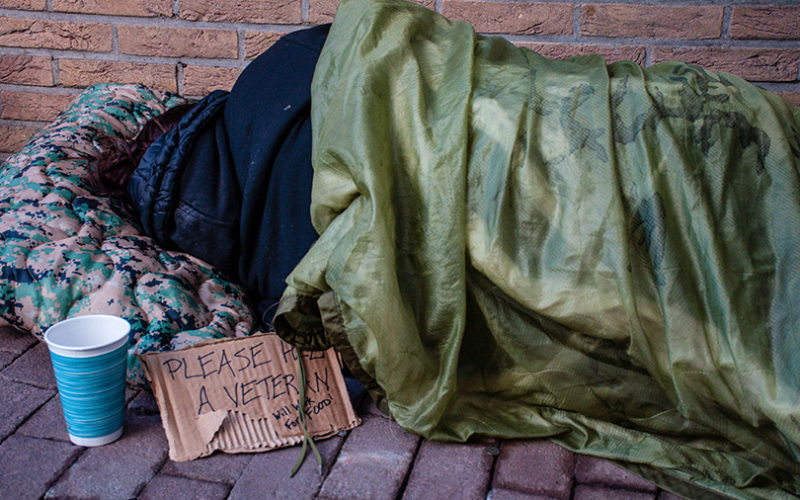
The number of homeless people dying in Sacramento County is up dramatically, according to a new report, reflecting a trend that’s engulfing the state as homelessness continues to rise.

The number of homeless people dying in Sacramento County is up dramatically, according to a new report, reflecting a trend that’s engulfing the state as homelessness continues to rise.

Despite the prevalence of undocumented immigrants in the state, as well as immigrants in general, disaster response for this population has been haphazard. A bill that would require all counties to translate emergency communications into the second most spoken language in their region, is now on Gov. Jerry Brown’s desk.

Environmental and community activists say the state is moving too slowly and not doing enough to protect children, pregnant women and farmworkers exposed to a pesticide called chlorpyrifos, a product commonly used on strawberries that is linked to developmental disabilities. They’re calling for an immediate, outright ban of the pesticide.

People living in poverty, tribal communities, immigrants and the elderly are expected to suffer disproportionately from problems caused by a changing climate.

Silicon Valley faced a seemingly impossible task: create permanent housing solutions for its most vulnerable residents in one of the least affordable markets in the world.
Yet, despite this daunting challenge, over the past five years, the tide finally seems to be turning.

California’s capital is one of the toughest places in the state for low-income seniors to afford rent, according to a new study.
UCLA researchers found that 68 percent of low-income seniors in Sacramento County suffer a severe rent burden, which means half or more of their pre-tax income is going toward housing. Another 17 percent suffer a moderate burden, where 30 percent or more of their pre-tax income is going to rent.

On any given night, 3,665 people experience homelessness in Sacramento. Five days a week, two nurses take to the streets to care for medically vulnerable residents who live under bridges, in alleys or in tents along the river.

In an ideal world, Jennifer Kent would like to have added 1,000 new dentists across California willing to accept enrollees in Denti-Cal, the state’s low-income dental program, over the past year. Kent, director of the California Department of Health Care Services, the agency that manages the program, has had to settle for a much more modest number: 73 new dentists.

Data released in June by California’s Department of Health Care Services show that nearly 7,000 Medi-Cal patients filed official grievances about “poor provider/staff attitude” in the last three months of 2017, the most recent data available, making it the top quality of care complaint.

Traditionally, the housing and health care industries have viewed one another as distinct. This distinction has prohibited us from seeing our broader intersections with economic, social and racial equity—and the solutions.